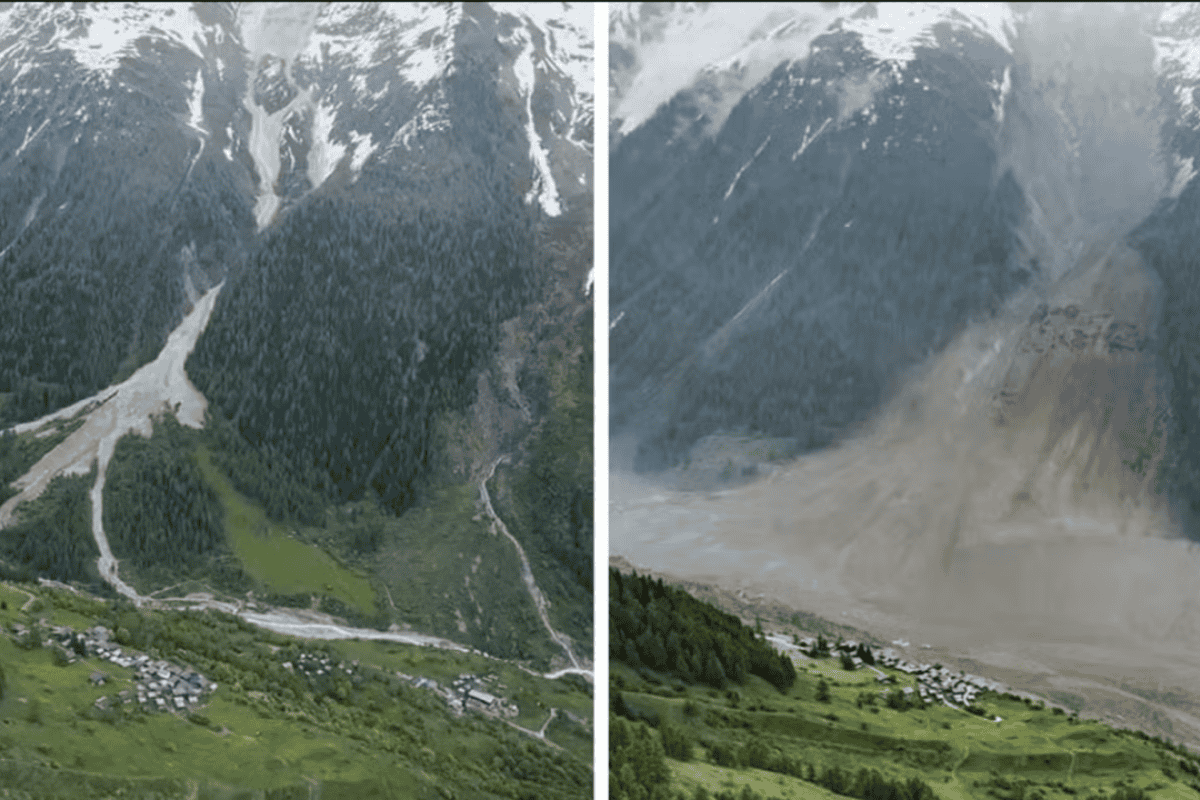
MY BACKYARD: On Wednesday, a massive avalanche of ice, rock, and mud buried 90% of the Swiss village of Blatten. The army is still searching for one missing person. This happened in my backyard, not metaphorically, but literally. I grew up at the Swiss border and now live in Geneva. Seeing my homeland disfigured by this tragedy is heartbreaking. But even more, it is a piercing reminder that climate change is not a future scenario it is now, and it is personal.
Experts from ETH Zürich and the University of Lausanne confirmed the link: permafrost is thawing, glacial movement accelerating, and the mountains are destabilising. “We’re only now truly starting to feel the changes in the system,” said Prof. David N. Bresch. And in places like Blatten, that change is sudden and devastating.
This moment took me back to another climate disaster etched into my life with Hurricane Otis in Acapulco. It destroyed more than 300,000 homes, including the one of wife’s family. These events are not isolated. They are the new normal. And they have shaped my professional path and purpose on “vocating” even more.
These disasters are not just wake-up calls, but they are turning points. They are why I co-founded resilienture (RESI), a global initiative to help at-risk communities weather the shocks of climate change by blending nature-based solutions with innovative finance and resilient infrastructure.
They are also why I just recently lead the acquisition of KOIS Advisory, to co-found Human Planet as a new venture that brings together blended capital, systemic resilience, and AI as an exponential value driver. Because it’s not just about protecting lives. It is about building futures.
“Impact is my dedication on people, planet, peace and prosperity. Not to nourish my ego with a legacy, but as a deeper devotion and greater purpose of my life.”
Yes, the threats are real. But so are the opportunities. Innovative finance models, AI-enabled adaptation tools, and nature as infrastructure are the building blocks of a new economy of resilience. Investing in resilience is not simply charity. It is not just teaching someone to fish, or giving them a fish. It is investing in the fishing business to see the entire communities thrive.
What happened in Blatten cannot be undone. But it can inspire us to act. The Alps, my backyard, are the epicenter of climate change in Europe. What happens here matters for all of us, not just as a warning, but as a lesson in resilience, innovation, and shared responsibility. We have the tools. We have the models. We have the urgency. Now, we must have the will.
Let us make resilience the currency of our time to “impact lives & share profits”.
Read the article on Linkedin here.