When artificial intelligence began writing essays, coding software, and diagnosing diseases faster than human beings could, the world celebrated a new wave of efficiency. Yet as machines become more capable, something unexpected is unfolding: humanity is losing clarity about what makes us truly human.
We have built education systems that teach us how to make a living, but rarely why to live one. For decades, learning has been designed around productivity rather than purpose, around testing rather than reflection, around employability rather than meaning. As artificial intelligence transforms every sector from finance to art, this imbalance is becoming impossible to ignore.
Artificial intelligence can simulate intelligence, but it cannot simulate intention. It cannot feel the pull of a vocation. It cannot ask the timeless question, “Why am I here?”
Over the last decades, I have worked across more than 50 countries, leading organisations, investing in impact, and mentoring thousands of young people, founders, and leaders. Across all cultures, one pattern repeats itself: people are highly skilled, yet deeply disconnected from their sense of purpose. I have met brilliant students paralysed by choice, executives exhausted by success, and communities that are not searching for employment, but for meaning and dignity.
As artificial intelligence continues to advance, one truth becomes clear. If we do not teach purpose, we risk creating a generation of human beings perfectly trained for a world that no longer exists.
In my work on the On Vocation Guide (by Routledge Books), I have come to understand vocation not as a profession, but as the intersection of purpose, passion, and contribution. Purpose-based education, or what I call “vocating”, is the practice of helping individuals align who they are with what the world needs. It is a structured process that connects inner motivation with real-world impact, from self-awareness and vision design to the measurement of meaningful outcomes. This is not a luxury reserved for the privileged. It is a necessity for every learner in a world where knowledge is abundant but meaning is scarce.
If we can embed vocational and purpose-based learning into secondary and tertiary education, we will build a learning system that prepares humanity for the realities of the AI era. This means teaching self-knowledge alongside literacy, integrating social contribution into every field of study, and measuring impact with the same seriousness as income. Such a transformation would not only prepare students for work. It would prepare them for life.
The essential question of our time is not whether artificial intelligence will replace human beings. It is whether we will remember what we are meant to do.
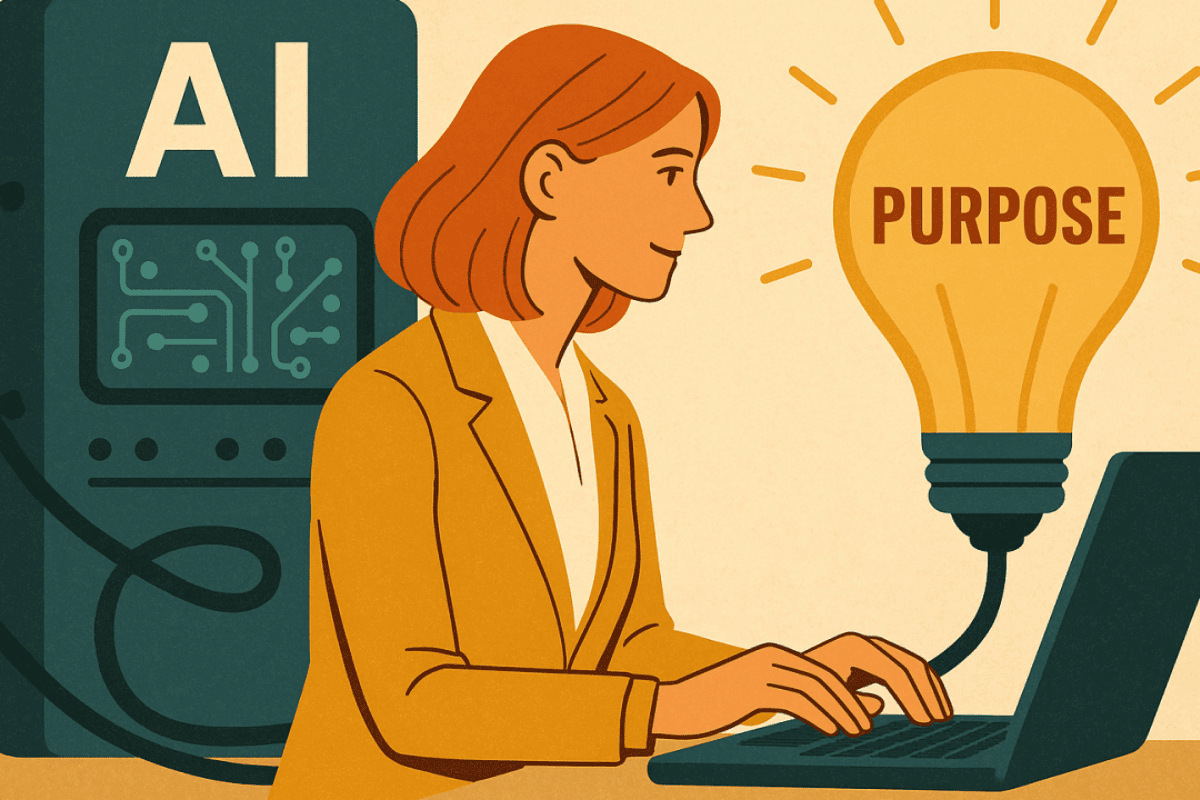
Purpose is the one human skill that artificial intelligence will never replace. It is the force that drives innovation, compassion, and courage. It is the foundation of leadership and the essence of fulfillment. If we teach purpose as early as we teach mathematics, we might raise a generation ready not only to coexist with technology, but to leverage it toward meaning.
In the coming months, I will share more about how this trends is expanding across classrooms, companies, and communities. For now, the invitation is simple: let us make purpose the new literacy, and let us put vocation at the heart of education.
The future will not belong to the most efficient. It will belong to the most aligned.
“Impact lives, share profits!”
Read the article on Linkedin here.