In recent months, we have witnessed a seismic shift in the global aid landscape. The dismantling of USAID, formerly the world’s largest donor, has effectively demolished a cornerstone of humanitarian and climate funding overnight, and the UK has followed the US’s lead by reducing aid spending from 0.5% to 0.3%. For those of us working in impact investing and sustainable development, this has been a rude awakening (to say the least).
I have often stated that silence and inaction are simply not options in this sector. If we genuinely care about building resilient systems, driving inclusive economies, and creating long-term solutions, then we must face the reality of disappearing public funds. It is obvious that private finance must now be the key to sustaining high-impact humanitarian and climate projects, and bold responses are needed. The question is: how do we rise to this challenge?
The shutdown of USAID is not a temporary setback. It is the first domino to fall in what is shaping up to be a major systemic shock to development financing. With its closure, countless local actors and development organisations have been left scrambling to replace the massive funding pipeline that once powered humanitarian interventions, climate adaptation projects, and critical livelihood initiatives around the globe.
And the problem will only worsen over the coming years. Other donor agencies and governments are following with aid cuts in response to geopolitical or economic pressure, with the EU having also announced cuts. The void is growing, and reliance on taxpayer-funded programs is becoming even more precarious. Already, we are seeing the diminished deployment of public resources jeopardising progress toward the Sustainable Development Goals (SDGs) and the climate targets set under the Paris Agreement.
Should this give us all cause for concern? Well, we indeed live in a “polycrisis” era where climate and biodiversity emergencies, food insecurity, and fragile health systems collide. These interconnected and mutually reinforcing challenges demand more resources to address, not less. Ignoring or downplaying these issues to suit short-term interests in a hostile political environment runs counter to everything we stand for in impact investing: resilience, long-term thinking, and genuine community empowerment.
On the flipside, the global development community has relied heavily on grants and aid from governments and philanthropic foundations. Yet, the truth is, public and philanthropic money has mostly been deployed as “soft power”, distorting local markets and eventually keeping people dependent on aid. Therefore, poverty uplift fails on an macroeconomic basis as well as an individual basis; it does not provide dignity as no one wants to be uplifted. Instead, prioritising economic empowerment provides underprivileged populations the chance to enhance their livelihood by themselves.
Now, with the world’s largest donor off the table, we have even more reason to look beyond traditional channels. This is a place where blended and innovative finance can step in. By carefully and creatively structuring projects, like results-based financing, development impact bonds and impact investing vehicles, we can attract private investors to initiatives that once relied solely on grants. Blended finance essentially makes “uninvestable” projects investable, enabling us to scale from millions of dollars in catalytic funds to billions in private capital.
However, it is not enough to simply re-label on an old approach. We need robust project design: clear impact metrics, measurable outcomes, risk-reward-adjusted strategies, and credible revenue models. Only then will mainstream investors feel confident enough to allocate funds, especially in volatile contexts like climate adaptation or humanitarian relief.
Ultimately, rather than siloed, short-term, issue-based funding, we need systemic capital flows to enable large-scale impact. If the tech sector can attract massive pools of venture capital by aligning innovators and investors around scalable solutions, why can’t development and climate initiatives do the same?
That is precisely the thinking behind KOIS’s new collaboration with MzN International. We have launched Human Planet to accelerate impact and global development, where NGOs, IGOs, and other implementers can pitch their high-impact initiatives to private investors and philanthropic funders. Our aim is simple: bridge the gap between private capital and the incredible, life-changing work happening on the ground.
If we have learned anything from the closure of USAID, it is that we cannot wait for public funding taps to turn back on. Now is the moment to reinvent how we fund humanitarian and climate initiatives, and rebuild the aid system before it collapses from the shock. And with advances in technology, data analytics, and innovative finance, this reimagining is more feasible than ever before.
Large, complex problems require large, well-structured capital solutions, and that is exactly what Human Planet aims to provide. But Human Planet is just one example of the fresh thinking we need across the sector. If we are serious about sustaining humanitarian aid and climate adaptation, we need cross-sector collaboration now. Only through combining philanthropic, public, and private resources can we ensure that no crucial initiative with a viable, well-structured plan goes unfunded.
The stakes are high. If we remain silent or try to remain neutral, we risk losing decades of progress. We are living in a time of enormous challenges, but that creates enormous opportunity and we now have the opportunity to redefine how humanitarian aid and climate finance works. To make it more resilient. We can build an ecosystem where implementers, investors, and policymakers co-create solutions at scale. Because, frankly, inaction is not an option when everything we have worked for around resilient communities, thriving ecosystems, and equitable development finally hangs in the balance.
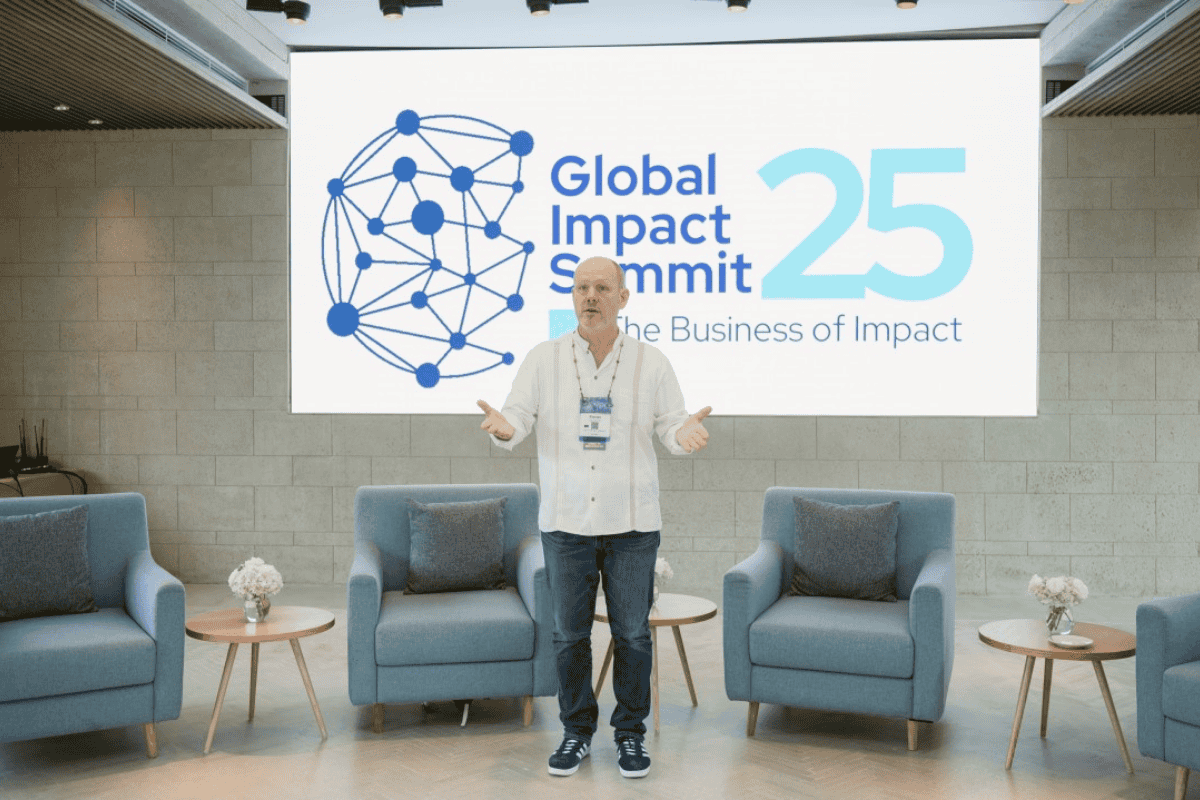
Like we have just last month experienced at the YPO Global Impact Summit in Vietnam private capital is a powerful force for good, and now more than ever, we need that force to help fill the void left by shrinking public aid.
Read the article on Linkedin here.